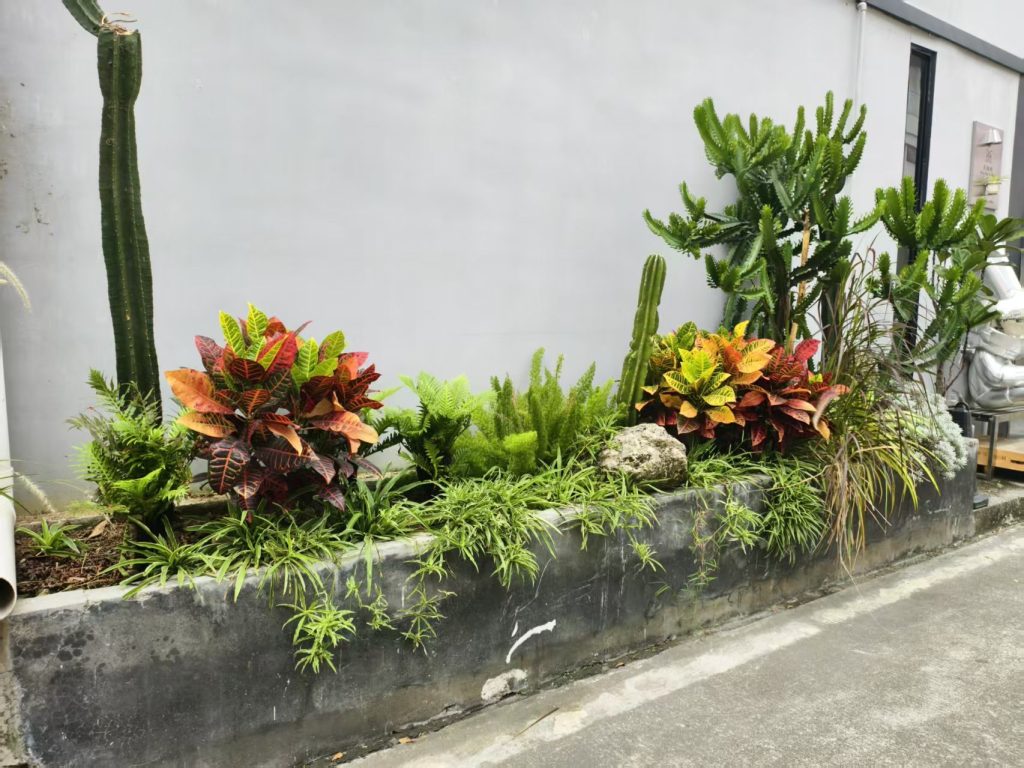
Why do cacti at some commercial entrances look high-end, while others look like a pile of pots?
In the previous issue, five street shots looked at white walls, trees and gravel edging; this time we change the plant: cacti and succulents.
At the same kind of commercial entrance, some people turn cacti into sculpture; others cram a dozen succulents into one planter. From a distance it looks lively; up close it looks like pots tipped into a trough. The difference is not the number of species but four things: sculpture, zoning, repetition, and detail with safety.
01 Treat the cactus as sculpture first, a plant second
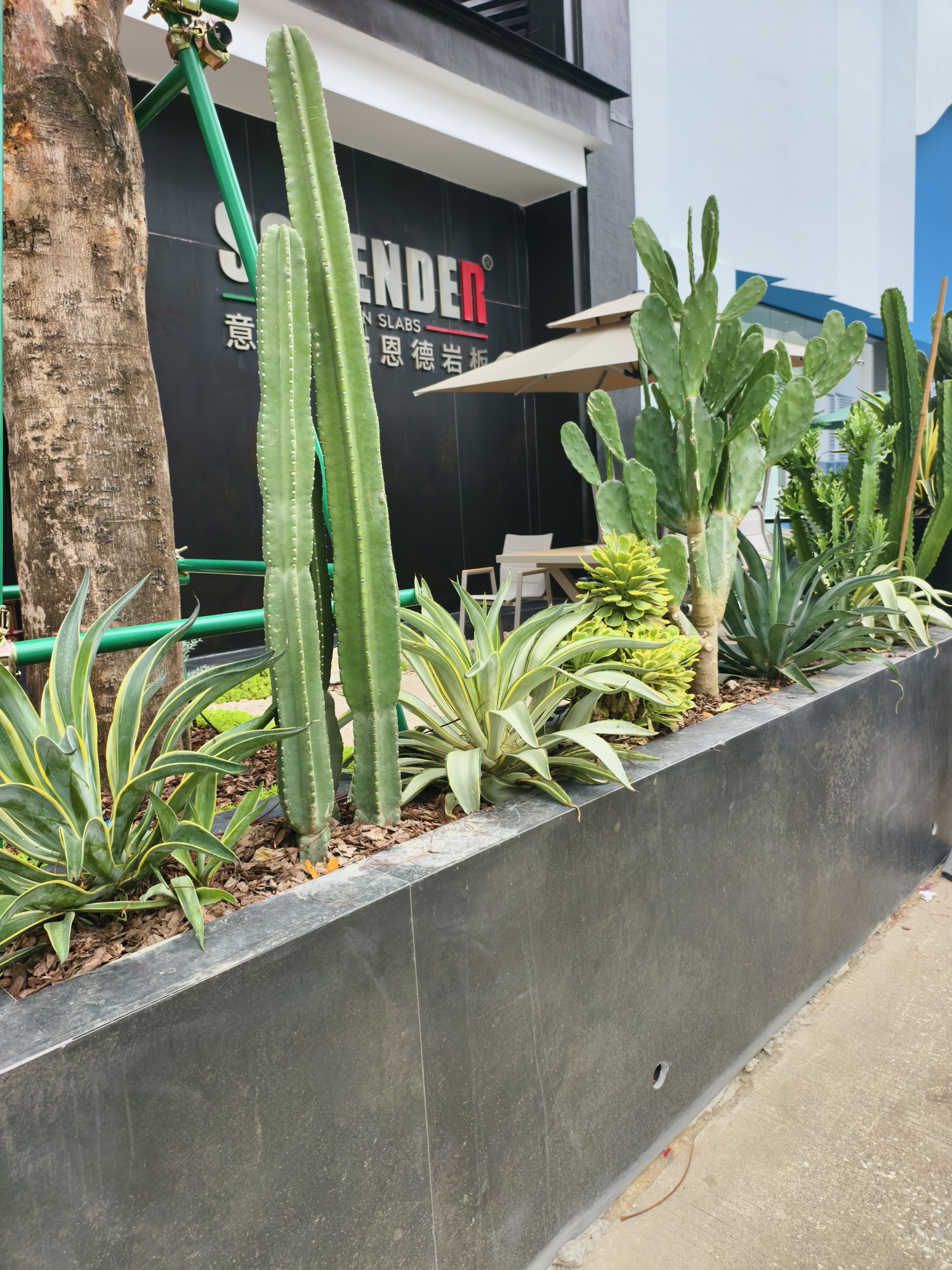
In this picture the cactus is not a supporting act; it is the main character. The upright columns pull the eye upwards, the dark stone facade provides the backdrop, and the height of the planter lifts the plants — the whole trough reads like a display plinth.
A few things you can copy:
- Set the height first. An entrance needs one upward line; then decide how many plants and how tall.
- Repeat two or three of the same type in one group; do not make every plant different.
- Do not make the planter too low; the trough itself is the plinth for the sculpture.
- The darker and cleaner the backdrop, the clearer the cactus ribs read.
02 Mixing is fine, but zone it first
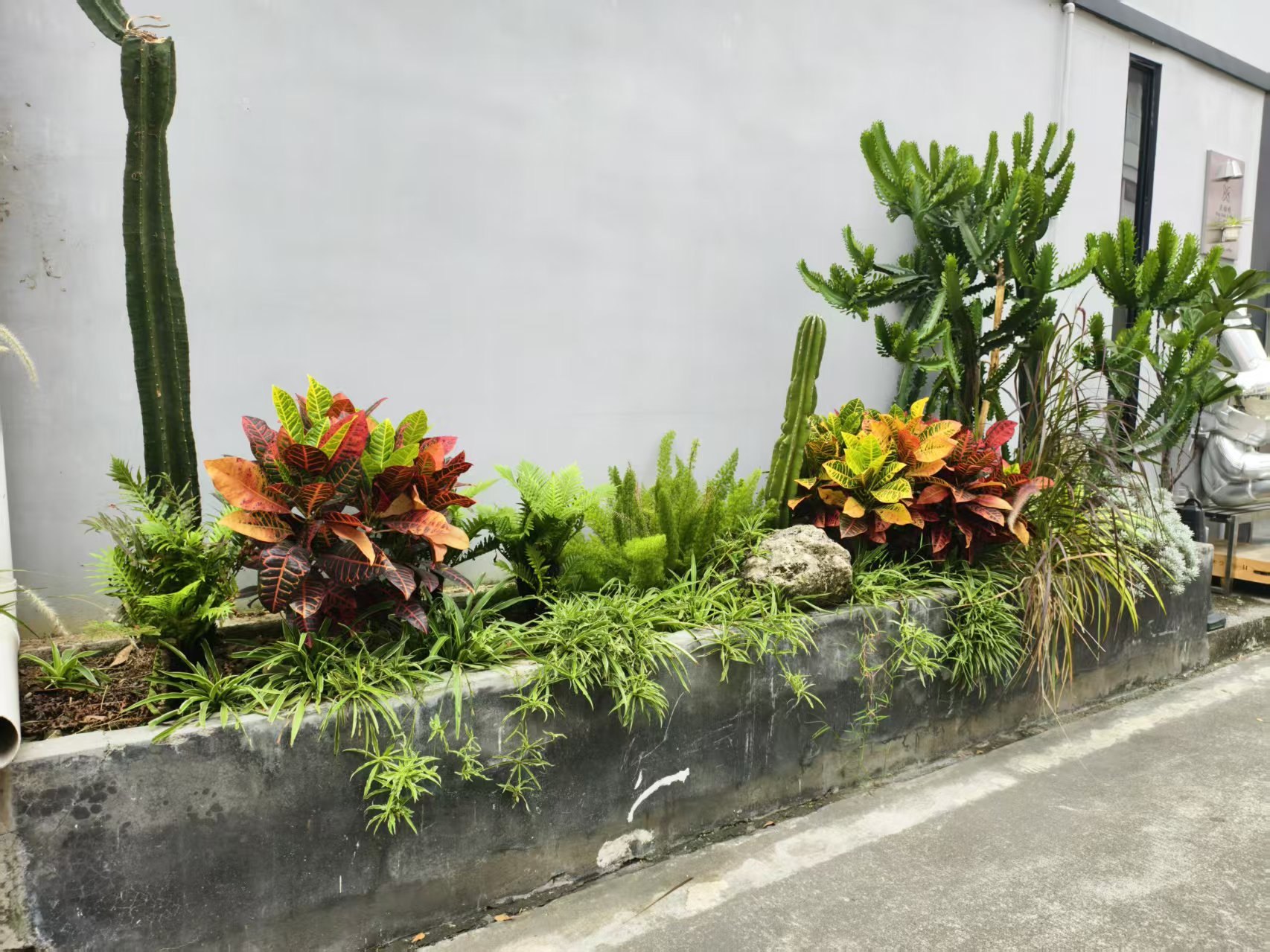
This planter catches the eye: red and yellow crotons, feathery ferns, columnar cacti and trailing plants all in one place. The problem is that these groups do not share the same water needs — cacti hate standing water, while ferns and crotons want a steadier supply.
Mixing is not forbidden, but zone it first:
- Put the cacti and succulents on the higher, faster-draining side; put the ferns and foliage plants on the other.
- Water them separately, or use different media and planting pockets; do not run the whole trough on one water quantity.
- Trailing plants will grow over the edge; trim them back regularly, or they will cover the cactus ribs.
- Keep to no more than three colour groups; the red, yellow and green here are already full, so leave the rest empty.
03 Repetition and proportion steady the picture
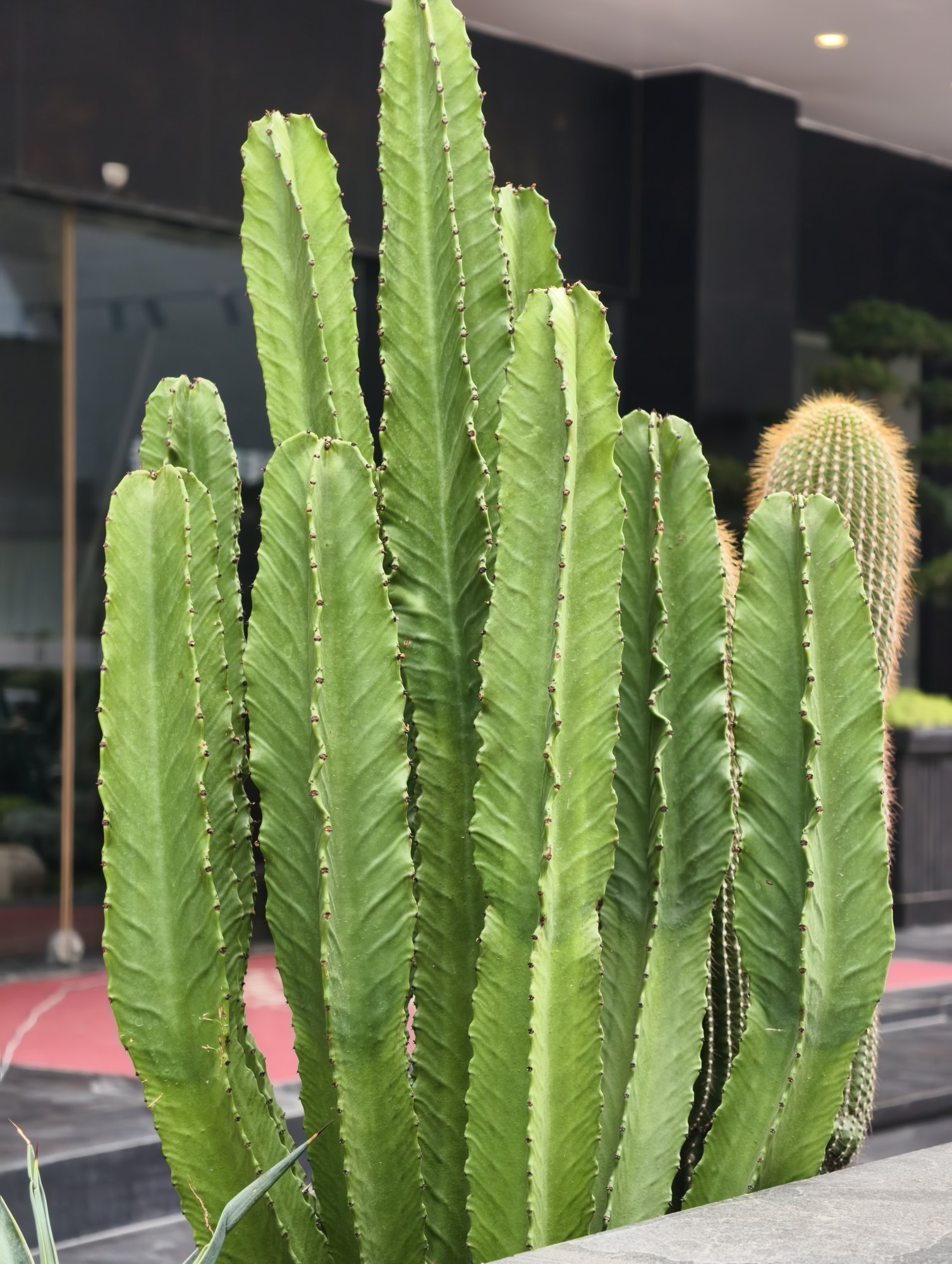
This close-up works not because the species is rare but because of repetition: several columns of similar thickness stand together, their ribs run in the same direction, their heights differ slightly, and a round cactus sits behind them as a contrast.
For commercial planting, rather than one of every species:
- Repeat the same species three or five times to make a group.
- Leave gaps between groups; do not fill the trough from end to end.
- Use one completely different shape as the focal point, such as a round or trailing form, and use it sparingly.
- Set the height and mass of the main subject first, then choose the supporting plants; do not buy plants first and think about composition afterwards.
04 Detail: ribs, spines and safety distance
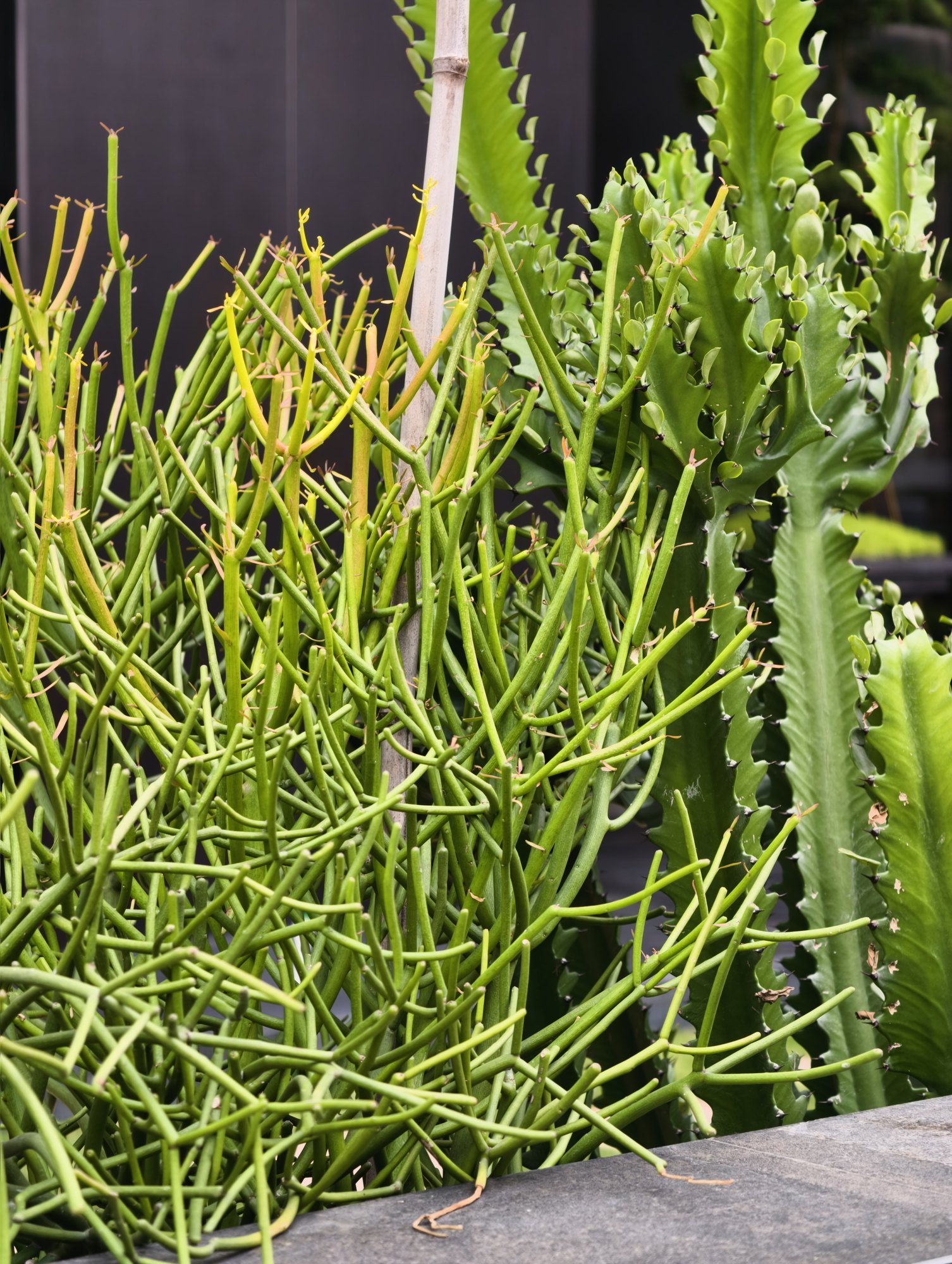
Up close, the detail of a cactus is all in the ribs and spines: some stems are as thin as pencils, some ribs are carved deep. That detail is where the high-end feel comes from, but at a commercial entrance it is also a safety risk.
- Do not leave spines at a height where pedestrians will brush them, especially beside the entrance, next to seating, or within reach of children.
- If you must use a spiny species, set it back, or put a low, spineless layer in front as a buffer.
- Some of the “cacti” in these street shots are actually succulent euphorbias, such as the ribbed green columns; their white sap irritates skin and eyes, so wear gloves and eye protection when pruning.
- Hong Kong’s rainy season is long, and what cacti fear most is not sun but standing water. The planter needs a drainage layer, the medium must be free-draining, and watering should be reduced in the wet season.
- “Low maintenance” in a commercial space does not mean no management: weeds, leaf litter, drainage and replanting all need a named person responsible.
In closing
The high-end look of cacti is not about buying every species, or using more expensive stone.
Treat them as sculpture first, setting height and mass; zone the planting before mixing, so plants with different water needs each have a place; use repetition and proportion to create order; and finally account for spines, ribs, drainage and safety distance. Do these four things, and an ordinary commercial entrance can still have a little of the distance of a desert garden.
If you are working on entrance planting for a shop, campus, office or clubhouse, send us a photo of the site, or see Gardening services and Landscape design; for more plants suited to Hong Kong outdoors, see Outdoor plants categories.