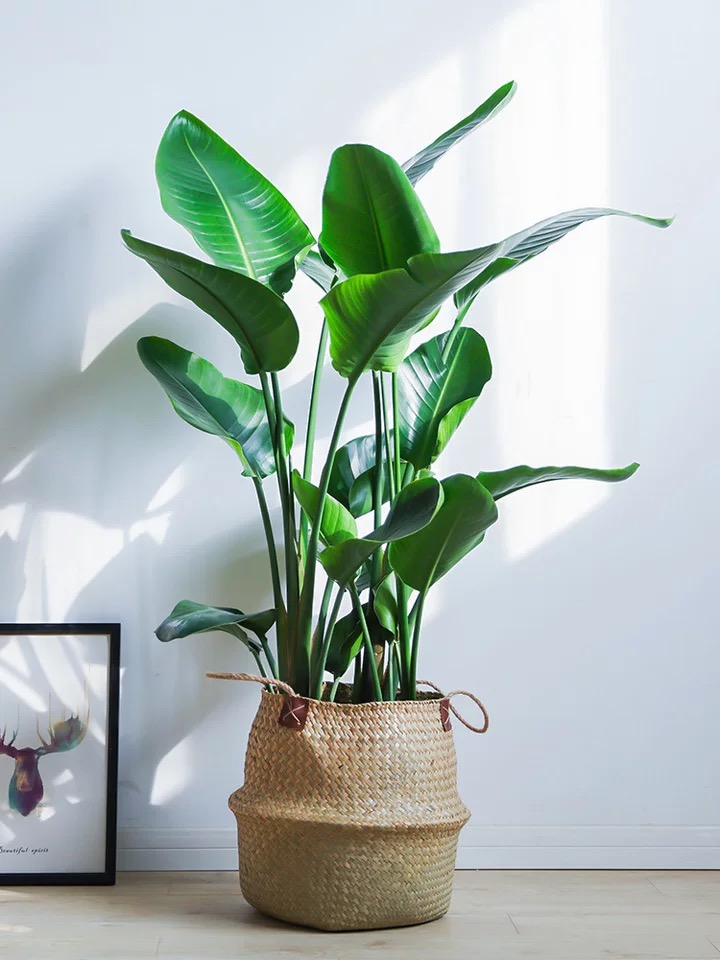
The short answer
Yes. Bird of paradise is native to the South African coast and grows in strong light; a mature, settled plant can take full sun outdoors. But "it can take sun" does not mean "move it straight out into the sun". In Hong Kong especially, direct sun through glass from midday to the west-facing afternoon, plus heat building up at the window, will scorch even a Bird of paradise.
The key comes down to three things: the time of day, how well the plant has adapted, and the water it gets after sun exposure.
Why Bird of paradise can take sun
Bird of paradise (Strelitzia nicolai, the giant Bird of paradise commonly sold in Hong Kong) comes from the coastal forest edges and dunes of South Africa's east coast, where it spends the day in strong light. Its leaves are thick and leathery, built for strong sun. So, given the right conditions:
- Outdoors on a balcony or rooftop: once acclimatised, it can take full sun.
- At an indoor window: with two to four hours of morning direct sun it grows faster and carries larger leaves, and only then does it have a chance of flowering as a mature plant.
- Indoors with only indirect light: it will not die quickly, but growth slows, new leaves get smaller, and it almost never flowers.
In other words, "bright indirect light" is the safe minimum indoors, not the maximum it enjoys. The "Light" field on the product page says "bright indirect light": that is a conservative spot for an ordinary home. What it really likes is a bright position with direct sun. See the plant light guide, which lists it at the same level, on the same safe baseline.
"Sun" and "baking in the sun" are two different things
A sudden move into full sun will always scorch it
A plant grown in a greenhouse or shade has a thin leaf cuticle and cannot resist a sudden jump in light. Sunburn typically looks like this: on the side facing the light, bleached white patches with sharp edges appear, turning brown and papery within days. The damaged tissue will not recover; you can only wait for new leaves.
So a newly bought plant that has always lived indoors needs to be acclimatised to stronger light first:
- Days 1–3: bright indirect light, no direct sun.
- From day 4: one hour of morning sun.
- Add 30–60 minutes every two or three days, working up to two to four hours of morning direct sun a day.
- If a white patch appears on a leaf, go back a step and wait until new leaves are steady before trying again.
In a Hong Kong summer, even sun-loving plants need some shelter
- South- and east-facing: morning sun is gentler here, which is ideal.
- West-facing (afternoon sun): direct sun from one to four in the afternoon is the fiercest. In summer, add a sheer curtain or move the plant back 0.5–1 metre.
- Behind glass: sunlight through glass is still direct sun. Glass blocks some ultraviolet, but not the heat. If the window does not get good airflow it becomes hot and stuffy; opening the window or adding a fan works better than closing the curtain.
- Balcony or rooftop: full sun is possible, but the potting mix and the sides of the pot get hot to the touch and the roots cannot take it. Use a light-coloured pot, shade the pot itself, and check the water every day in summer.
The more light it gets, the more water it needs
Bird of paradise grows fast in direct sun and loses water fast. Rather than fixing on "once a week", dig 3–4 cm into the top of the potting mix each time: if it is dry, water thoroughly until water runs out of the bottom, then empty the saucer. A potted plant in a sunny spot may need water every 3–5 days in summer; in winter or in low light, stretch the interval. Water the potting mix, not the crown of the plant, so water does not sit there and rot it.
Sunburn, underwatering or normal split leaves: how to tell them apart
| What you see | Most likely cause | What to do |
|---|---|---|
| Bleached white patches on the leaf, with sharp edges | Sunburn (a sudden move into full sun) | Move it out of direct sun, keep the leaf for now, and wait for new leaves |
| Brown, scorched leaf edges or tips; leaves curling | Underwatering or very dry potting mix | Water thoroughly, then adjust according to how dry the surface is |
| Lower leaves yellowing, tips soft and brown, potting mix wet | Overwatering, roots short of air | Stop watering, improve airflow, check drainage |
| Leaves split along the veins | Normal; large leaves split naturally | Nothing to do; the product page notes this too |
| New leaves smaller, stems stretched | Not enough light | Move it somewhere brighter |
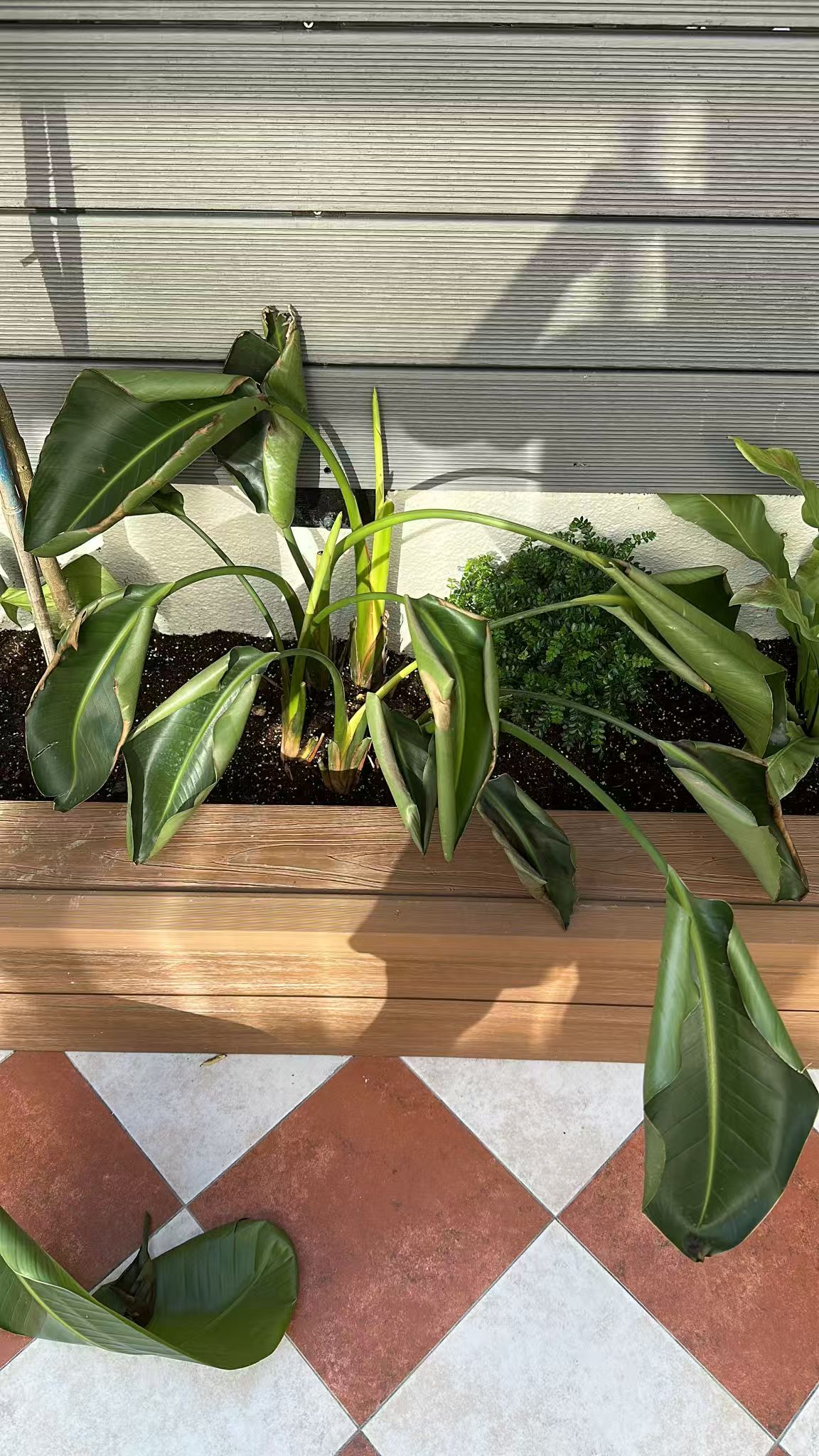
One more thing: split leaves are not sunburn. The larger a Bird of paradise leaf grows, the more easily it splits. In the wild the wind does it, and it happens indoors too; it has nothing to do with how much sun the plant gets.
Where to put it, based on the light in your home
- A window with two to four hours of morning direct sun: the best spot. Turn the pot 90° every one or two weeks so all sides get even light.
- Bright indirect light only: it will live, but grow slowly. Keep it as close to the window as you can, not deep in the room.
- A west-facing floor-to-ceiling window: add a sheer curtain or move it back; watch the afternoon heat in summer especially.
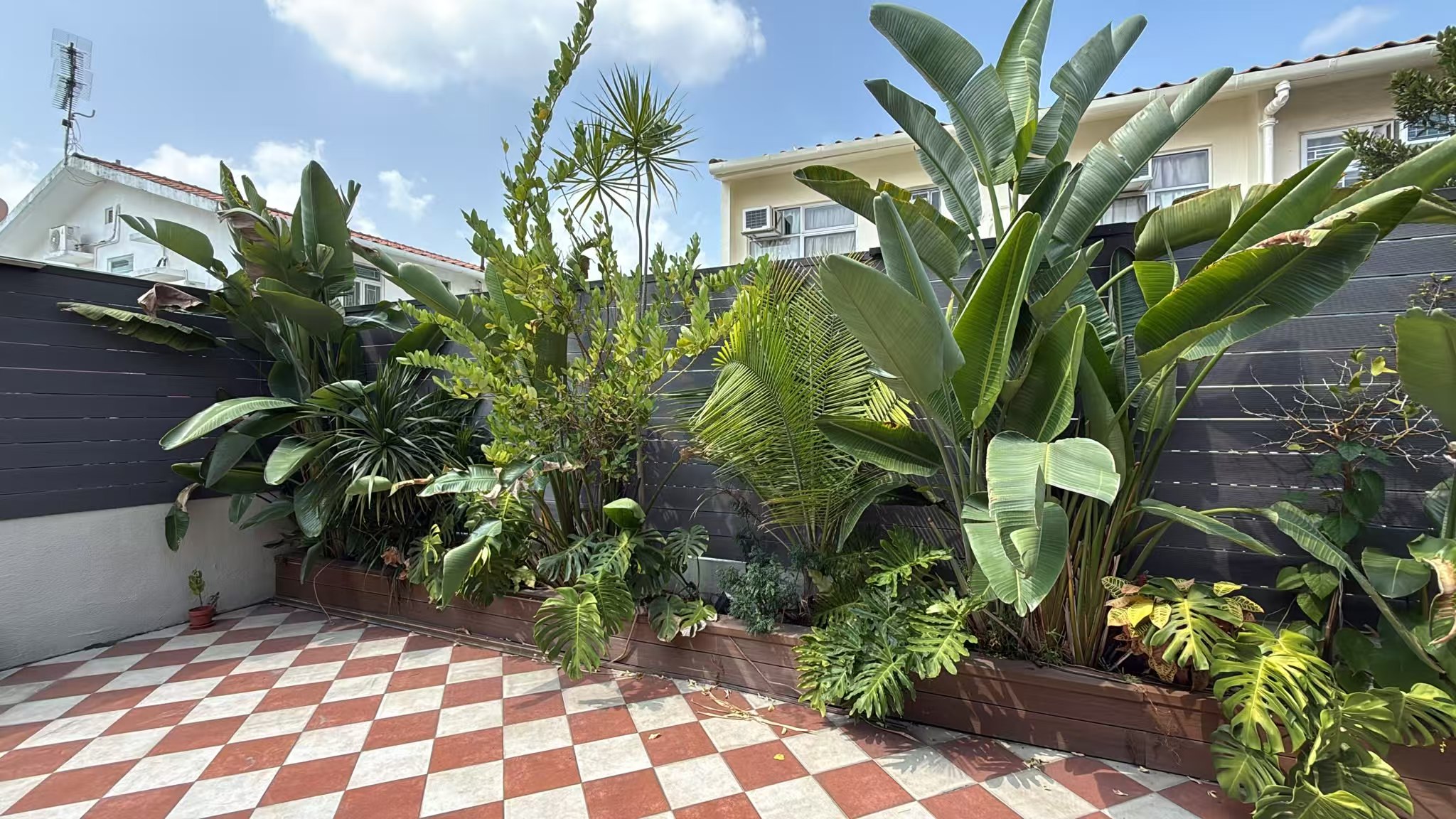
- Balcony or rooftop: once acclimatised, full sun is fine. In summer watch the pot temperature, the water, and secure it before a typhoon.
- A low-light corner: not recommended. If you want a low-light spot, consider Sansevierias and ZZ plant as shade-tolerant alternatives.
FAQ
Does sun through glass count as direct sun?
Yes. Glass blocks some ultraviolet, but visible light and heat still come straight through, and the window can be stuffier than the outdoors. "Behind glass" is not automatically safe.
Should I cut off a sunburnt leaf?
No need to rush. The damaged part will not recover, but it can still photosynthesise; once new leaves have grown and the plant has recovered, cut the dry old leaf off at the base of its stalk.
Can it take full sun in winter?
Hong Kong winters are mild, so yes. In a cold snap, keep it out of cold draughts; growth slows below 10°C, and near 0°C move it indoors or to a sheltered spot.
It is not flowering — is that a lack of light?
Not enough light indoors is one common reason. It also needs a mature plant, plenty of light and appropriate feeding; getting a Bird of paradise to flower indoors is not easy.
Is it safe with cats and dogs?
Bird of paradise is mildly toxic to cats and dogs; eating the leaves mainly irritates the mouth and stomach. Keep it where pets cannot reach it; if you want another plant, choose Pet-Friendly Plants, which are safer.
In short
Bird of paradise is not afraid of sun; it is afraid of "sudden" and "stuffy". Give it plenty of morning direct sun, a buffer from the west-facing summer sun, and water that keeps up, and it will reward you with bigger leaves.
To see the Bird of paradise in our shop, choose by height and pot: Bird of paradise (110 / 160 / 180 cm). Not sure which light level your home has? Start with the plant light guide; for more easy-care options, see Easy-care plants and Outdoor plants categories.